
Epidural
An epidural is one of the pain relief options available in labour, and it’s a choice some women make before labour and others decide on along the way. If you’re considering one, knowing what to expect can make the experience feel less daunting. Here’s a simple guide to what happens, from asking for an epidural through to having it in place, so you can feel informed and confident about your choices.
An Epidural Pack is a sterile kit that contains all the necessary equipment for placing an epidural. It helps to ensure safety of epidural placement.
What's used for an Epidural Placement?
- Sterile gloves and gown - For the Anaesthetic doctor to wear after scrubbing, to ensure that the procedure remains sterile.
- Antiseptic Solution - For cleaning your back before the procedure.
- Sterile Drape - To keep the area of your back clean and germ-free.
- Local Anaesthetic - A medication used to numb the area of your back where the epidural will be placed.
- Epidural Needle - A special needle used to find the epidural space in your back.
- Epidural Catheter - A soft thin tube that stays in place to allow continued delivery of medication.
- Syringes and Saline - Used to confirm proper placement.
- Adhesive Tape - To secure the catheter in place.
- Filter and Extension Line - Ensures only medication flows through the catheter tubing, and connects the catheter to the pump.
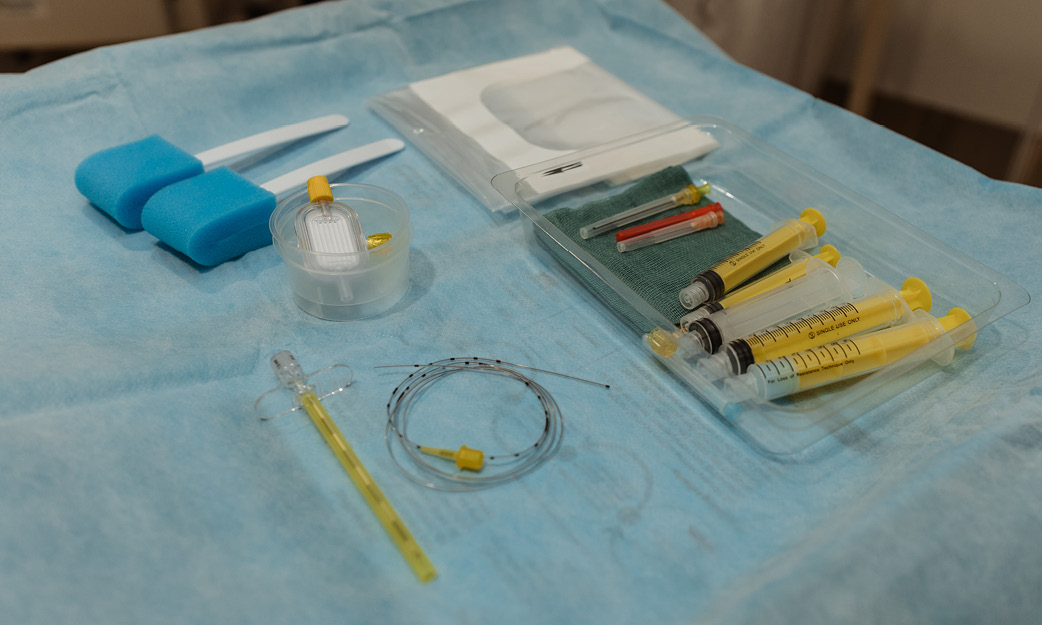
During the epidural, your maternity team and anaesthetist will support you through contractions and help you into position. Once it’s in, they’ll ensure you stay as mobile as possible while keeping you comfortable.
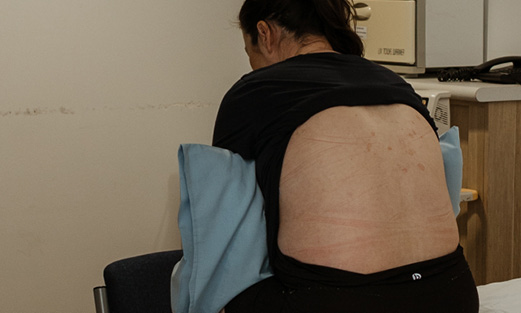
You will be asked to either sit on the edge of the bed with your back curved or lie on your side with knees drawn up to your chest. Imagine trying to eat an M&M out of your belly button.
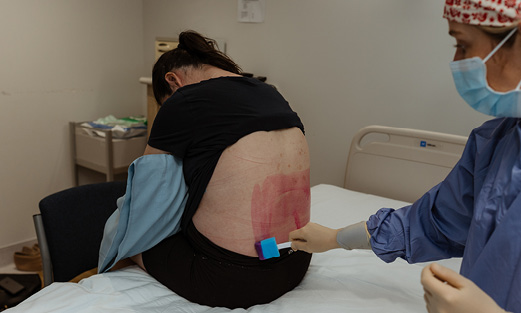
Your lower back will be cleaned with an antiseptic solution to minimise the risk of infection.
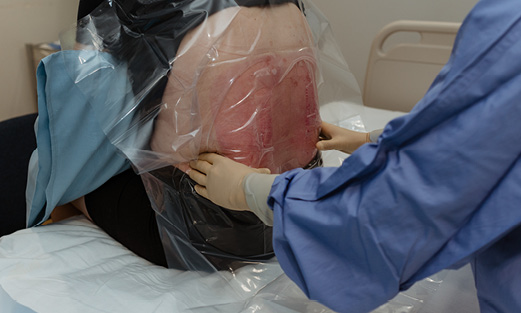
A sterile drape will be stuck to your back. Most often this is a sticky piece of plastic. This keeps your back sterile and protects the area from outside bacteria.
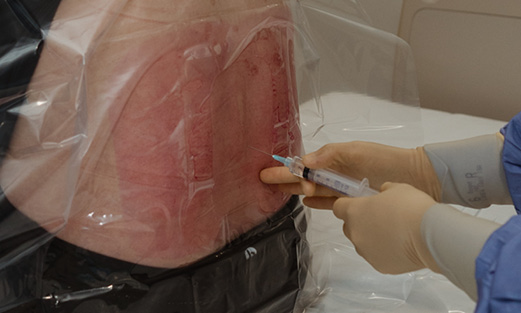
A small injection of local anaesthetic will be given to numb the skin where the epidural will be inserted. This may sting for a few seconds.
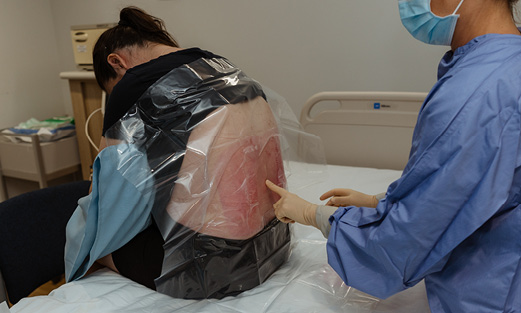
The anaesthetist will press on your back to find the right spot. They may ask you some questions while they are doing this.
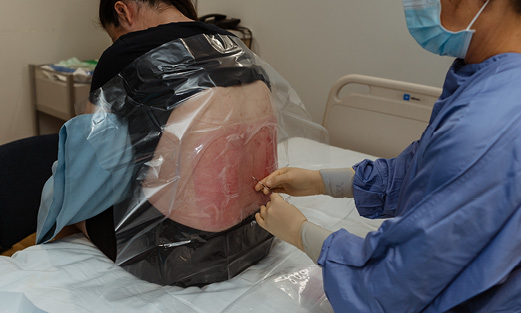
They will carefully insert a hollow needle into the epidural space in your lower back. You may feel some pressure or a pushing sensation. If you feel any pain you should let the anaesthetist know, so that they can place more local anaesthetic. You will be asked to stay as still as possible (to allow placement to occur), and inform the anaesthetist if you feel any unusual sensations, such as tingling in your legs.
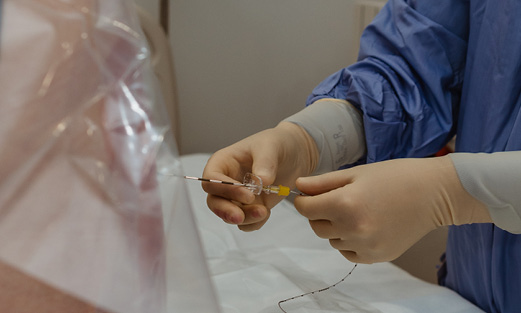
Once the needle is correctly placed, a thin, flexible catheter is threaded through the needle into the epidural space.
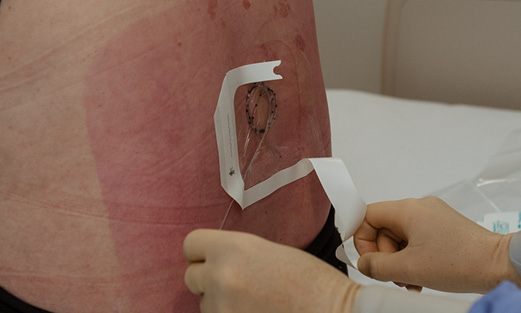
The needle is then removed, leaving the catheter in place. This will be wound up and secured to your back before taping
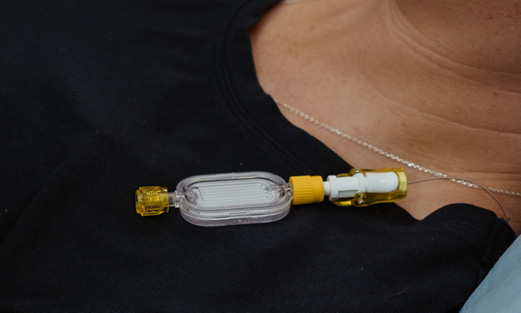
The end of the epidural catheter, which is usually brightly coloured for easy visibility, is positioned over the shoulder after the catheter is secured in place. It allows your birthing team to administer medication conveniently and safely by connecting it to a syringe or infusion pump. The tubing and connector are taped securely to prevent accidental displacement while ensuring accessibility during labour or surgery.
Once it’s no longer needed, the anaesthetist will gently remove the catheter. This is quick and usually painless. You may feel some numbness in your legs for a few hours after the epidural wears off.